
Peptide Handling and Reconstitution: Best Practices for Research and Laboratory Protocols
- finsterbrad
- 4 hours ago
- 4 min read
Published by Clinical Peptide Education Resource
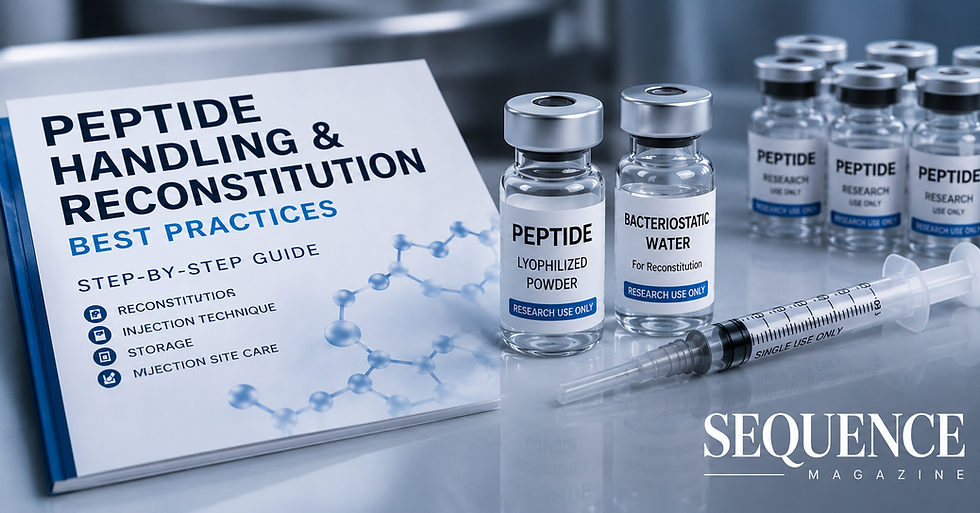
As peptide research continues expanding across scientific, performance, and longevity-focused sectors, proper handling procedures remain an important part of maintaining compound integrity and consistency. A recently published educational guide outlined best practices surrounding peptide reconstitution, storage, injection preparation, and management of common handling issues frequently encountered in laboratory and clinical environments.
The report emphasized that peptides are structurally sensitive compounds, meaning preparation and storage methods may significantly influence stability, consistency, and handling quality over time. Researchers and clinical professionals increasingly stress the importance of standardized preparation techniques to minimize degradation, dosing inconsistencies, and unnecessary waste.
What Are Peptides?
The guide described peptides as short chains of amino acids that function as signaling molecules within biological systems. Depending on the specific compound being studied, peptides may interact with pathways associated with hormone signaling, tissue repair, immune modulation, metabolic regulation, and cellular communication.
Because many peptides are distributed in lyophilized (powdered) form, proper reconstitution is considered a foundational step before handling or administration protocols begin.
Step-by-Step Peptide Reconstitution Guide
Materials Commonly Used During Reconstitution
Peptide vial
Bacteriostatic water
Reconstitution syringe
Alcohol wipes
Dosing or reconstitution chart
Reconstitution Process
Step 1: Prepare the Workspace
Clean the workspace thoroughly and wash hands before handling materials.
Step 2: Remove Protective Caps
Remove caps from both the peptide vial and bacteriostatic water vial.
Step 3: Sanitize the Vials
Use alcohol wipes to clean the rubber stoppers on each vial and allow them to air dry completely.
Step 4: Draw the Water
Using the provided dosing or reconstitution chart, draw the appropriate amount of bacteriostatic water into the syringe.
Step 5: Inject Slowly
Insert the needle into the peptide vial at a slight angle and slowly inject the bacteriostatic water to reduce bubbling and agitation.
Step 6: Allow Pressure to Equalize
Before removing the syringe, slightly raise the needle above the liquid level while keeping it beneath the stopper. Release the plunger slowly to help normalize internal vial pressure.
Step 7: Dissolve the Peptide
Gently swirl the vial until the peptide powder fully dissolves. Do not shake the vial aggressively.
Step 8: Refrigerate
Store the reconstituted peptide in a refrigerator immediately after preparation.
Why Pressure Balance Matters
According to the guide, pressure balance inside the vial can influence how easily future doses are drawn. Improper pressure equalization may create resistance or inconsistent flow during later handling.
The article explained that allowing the vial to normalize naturally after adding bacteriostatic water may improve consistency when repeatedly drawing from the same vial.
Checking Vial Pressure
The guide suggested the following process for checking pressure balance:
Fill a syringe partially with air.
Insert the needle into the vial without moving the plunger.
Observe whether the plunger remains stable.
If movement occurs automatically, allow additional time for pressure equalization.
Peptide Injection Preparation
The article noted that many peptides are commonly handled using subcutaneous injection methods involving tissue beneath the skin surface. In certain cases, intramuscular administration may also be utilized depending on protocol design.
Common Injection Areas Mentioned
Lower abdomen
Upper outer thighs
Upper glute area
Upper outer arms
The guide also referenced certain peptides being used closer to targeted areas when directed by a provider or research protocol.
General Injection Steps
Clean the injection site thoroughly.
Pinch a small fold of skin.
Insert the needle at a slight angle.
Inject slowly and steadily.
Dispose of syringes safely using approved sharps procedures.
Combining Multiple Peptides
The guide discussed situations where some peptides may be combined into a single syringe to reduce the total number of injections.
Suggested Best Practices
Ensure pressure is balanced in each vial
Draw compounds sequentially
Inject shortly after combining
Avoid storing preloaded syringes long term
Confirm the solution remains clear and free of cloudiness
The report also cautioned that not all peptides maintain stability when mixed together, and compatibility should always be verified before combining compounds.
Injection Site Reactions
Mild redness, swelling, itching, or irritation were described as relatively common localized reactions. The guide explained that these responses may result from immune activity, injection technique, concentration, injection volume, or sensitivity to bacteriostatic water.
Methods Discussed for Reducing Irritation
Rotate injection sites regularly
Allow compounds to reach room temperature before use
Inject slowly
Avoid rubbing the injection site afterward
Split larger volumes into multiple injection sites when necessary
Storage Recommendations
Powdered Peptides
Store refrigerated or frozen
Reconstitute only when ready for use
Long-term cold storage may extend stability
Reconstituted Peptides
Store consistently refrigerated
Avoid repeated freezing and thawing cycles
Nasal Sprays and Creams
Refrigeration was also recommended for many compounded formulations discussed in the article.
The guide further noted that brief periods at room temperature may affect potency more than safety, although refrigeration remained the preferred handling method whenever possible.
Why This Matters to the Industry
As peptide-related research expands globally, discussions surrounding handling standards, storage consistency, and preparation protocols are becoming increasingly important across research, manufacturing, and clinical sectors. Proper reconstitution and storage practices are widely viewed as critical components of maintaining consistency, minimizing degradation, and improving reliability within peptide-related workflows.
Educational resources such as this reflect the broader industry emphasis on standardization, quality control, and responsible handling practices as peptide science continues evolving.
Credit: This brief summary is based on reporting originally published by a Clinical Peptide Education Resource.
Editor’s Note: This article is provided solely for research, educational, editorial, and industry discussion purposes. Sequence Magazine does not promote, recommend, endorse, or imply any personal use, medical use, therapeutic benefit, treatment outcome, or health claim related to peptides or associated compounds. The content referenced herein reflects third-party reporting and industry developments, and should not be interpreted as medical advice, product claims, or regulatory guidance.


Comments