
Proper Peptide Storage and Handling Practices Highlighted in Recent Industry Guide
- finsterbrad
- 2 days ago
- 2 min read
Originally reported by Therapy for Living Published February 17, 2026
A recently published peptide storage guide from Therapy for Living is drawing attention to the importance of proper handling, temperature control, and storage procedures for maintaining peptide stability in research environments.
According to the article, peptides are highly sensitive compounds that can degrade when exposed to moisture, heat, oxygen, or light. The report explains that degradation may occur through hydrolysis, oxidation, or molecular aggregation, all of which can reduce long-term stability and overall sample integrity.
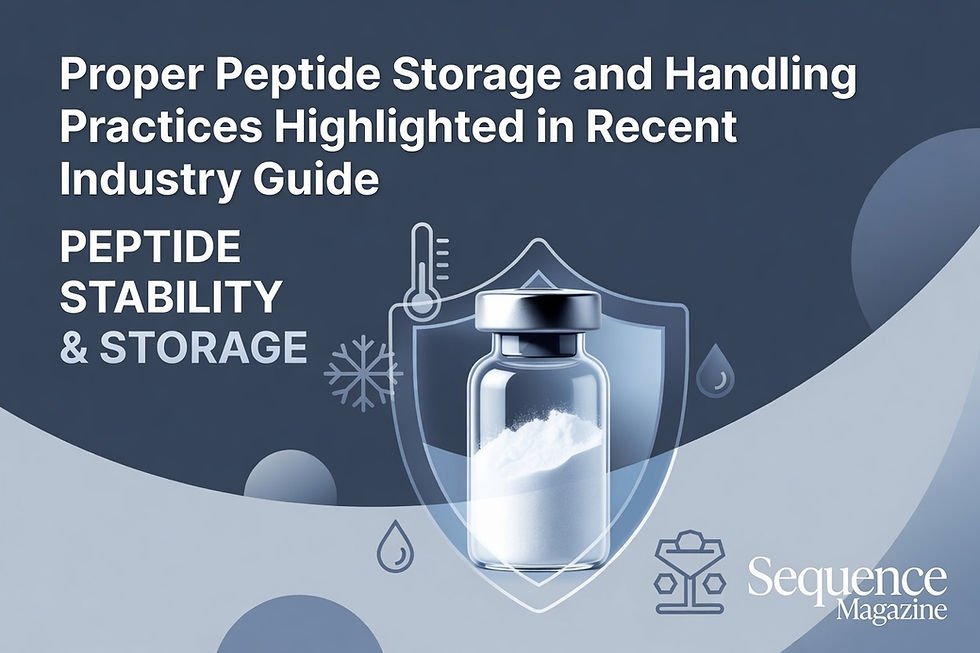
The guide emphasizes that lyophilized (freeze-dried) peptides are generally considered the most stable form for long-term storage. Therapy for Living recommends storing sealed lyophilized peptides at freezer temperatures around -20°C for extended preservation, while lower temperatures such as -80°C may further extend stability for certain compounds.
The article also discusses the importance of protecting peptides from humidity and repeated air exposure. Researchers are encouraged to keep vials tightly sealed, limit unnecessary opening of containers, and avoid exposure to light whenever possible.
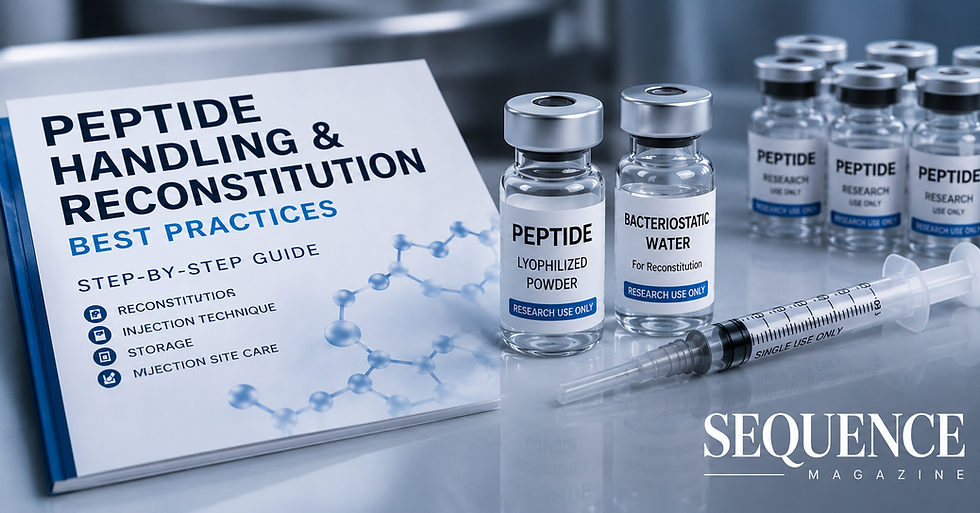
A major focus of the report centers on reconstituted peptides. Once mixed with a solvent such as bacteriostatic water, peptides become significantly less stable and typically require refrigeration between 2–8°C. The article notes that repeated freeze-thaw cycles may contribute to aggregation and degradation over time, making aliquoting a preferred storage practice for longer-term handling.
Sterile handling procedures were also highlighted throughout the guide. The article recommends using sterile syringes, alcohol-swabbed vial tops, and clean handling practices to minimize contamination risks that could impact peptide stability.
Another notable point discussed involves physical handling during reconstitution. Rather than aggressively shaking peptide solutions, the report suggests gentle swirling or slow mixing methods to reduce unnecessary stress on delicate peptide structures.
The publication reflects a broader industry trend toward improved education surrounding laboratory handling procedures, peptide stability, and long-term storage practices as research materials continue to gain attention throughout analytical and scientific communities.
Source: Therapy for Living — “How to Store Peptides: Complete Storage Guide”
Credit: This summary is based on reporting originally published by Therapy for Living.
Editor’s Note: This article is intended solely for research, educational, and industry discussion purposes. It does not promote, recommend, or imply any personal use, medical use, health benefit, treatment outcome, or therapeutic application of peptides or related compounds.


Comments