
FDA Faces Pressure to Ease Access to Peptides
- NuLab Peptides - Research Journal
- 5 days ago
- 2 min read
As interest in GLP-1 weight-loss medications continues to grow, the broader peptide market is attracting more attention from patients, doctors, compounding pharmacies, regulators, and drugmakers.
Peptides are short chains of amino acids that help regulate important biological functions in the body. In medicine, peptide-based drugs are designed to mimic or influence natural signals in the body and are already being used in areas such as metabolic health, weight management, and other therapeutic categories.
According to the article, demand for GLP-1 medications helped drive a national shortage, creating an opening for licensed compounding pharmacies to produce compounded versions of drugs such as semaglutide and tirzepatide. These compounded versions offered some patients more flexible dosing options compared with standard single-dose weekly pens.
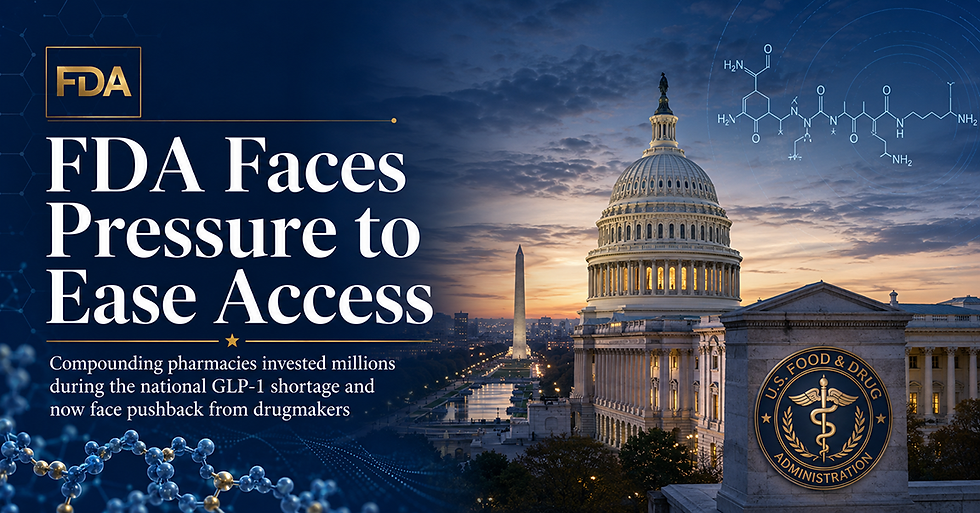
Compounding pharmacies reportedly invested millions of dollars into developing, manufacturing, and supplying these medications during the shortage. Now, as the market grows and drugmakers push back, the FDA is facing pressure to decide whether access to certain peptides should remain restricted or become easier under updated rules.
The article also notes that the peptide market has expanded beyond approved GLP-1 drugs, with various peptides being marketed for weight loss, muscle building, injury recovery, and other uses. Some are sold through licensed pharmacies, while others are available from less verified sources. That has created a fast-growing but uncertain market where consumer demand is rising faster than the regulatory framework.
The FDA is expected to review whether to loosen regulations on several peptides during a summer meeting. The outcome could have major implications for compounding pharmacies, pharmaceutical companies, doctors, and consumers interested in peptide-based therapies.
The larger takeaway is that peptides are becoming a major focus in health and wellness, but the rules around access, safety, compounding, and oversight are still evolving.
Credit: This brief summary is based on reporting originally published by FOX News.
Editor’s Note: This article is intended solely for research, educational, and industry discussion purposes. It does not promote, recommend, or imply any personal use, medical use, health benefit, treatment outcome, or therapeutic application of peptides or related compounds.


Comments